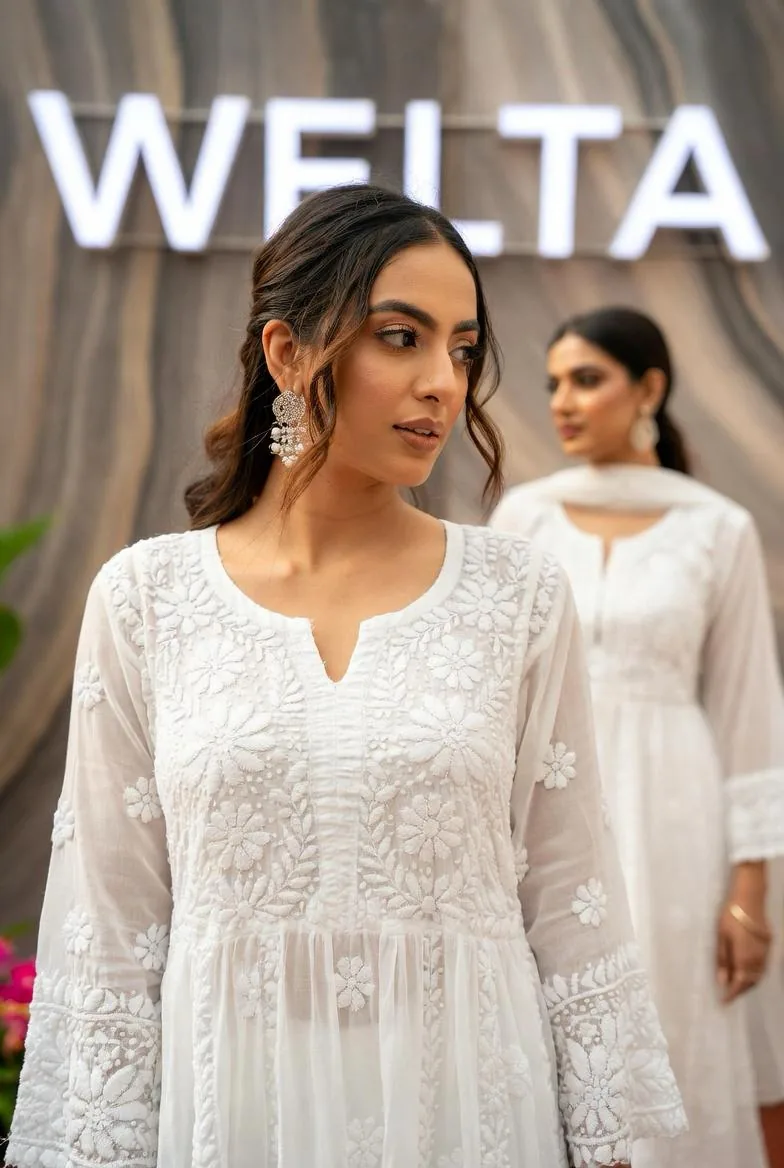
Handmade vs Machine Embroidery: What You're Actually Paying For
Updated July 2026
A hand-embroidered chikankari kurta and a machine-embroidered one can look similar in a product photo. The difference shows up in time, texture, and how the piece ages.
Time investment
A single hand-embroidered chikankari piece can take an artisan anywhere from a few days to several weeks, depending on the density and complexity of the work — jaali (net) work and mukesh (metallic thread) detailing are especially time-intensive.
Machine embroidery completes the same visual area in minutes, since a programmed machine repeats a digitised pattern automatically.
Texture and dimension
Hand stitches sit at slightly varied heights and angles, giving genuine chikankari a soft, dimensional texture you can feel.
Machine embroidery is more uniform and flatter, since it's following one repeated stitch path exactly.
What the price actually reflects
The cost difference between hand and machine chikankari isn't primarily about materials — thread and fabric cost is similar. It's compensating the artisan's time and skill directly.
Buying hand-embroidered pieces supports the same Lucknow artisan community that has kept this craft alive for generations, rather than a purely automated production line.
How to tell which you're buying
See our companion guide, "How to Identify Real Chikankari," for the specific checks — texture, back-of-fabric appearance, and natural irregularity.
Shop related pieces