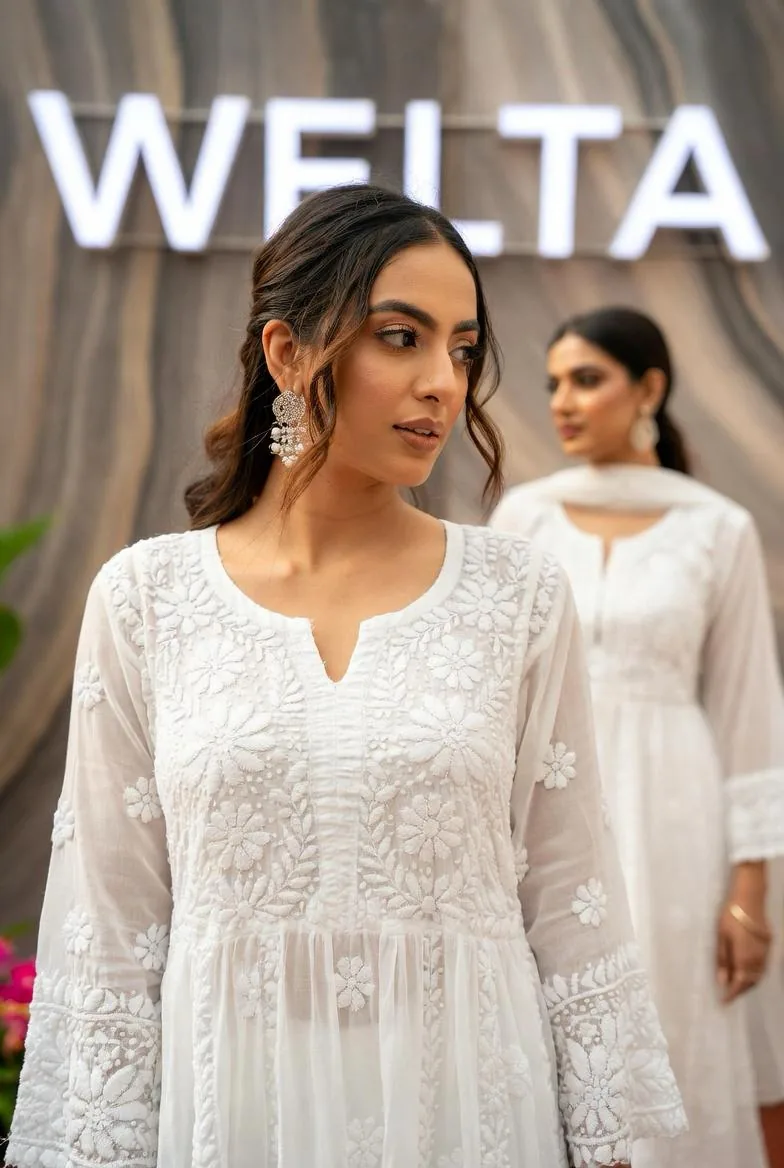
Cotton vs Mulmul: Which Fabric Should You Pick?
Updated July 2026
Both are natural, breathable fabrics and both take chikankari embroidery beautifully — but they behave differently in daily wear, which matters more than either being objectively "better."
Weight and weave
Cotton, in the way most kurtas use it, is a mid-weight, closely-woven fabric — sturdy, holds its shape through the day, and works well for office wear or pieces you'll wash often.
Mulmul is a finer, lower-thread-density weave of the same cotton fibre — lighter, slightly sheer at times, and drapes softly rather than holding a crisp shape.
Feel against the skin
Mulmul is noticeably softer and cooler in humid weather because of its open weave — it's the traditional choice for peak summer and for chikankari specifically, since the embroidery was historically worked on fine mulmul in Lucknow.
Regular cotton is a little firmer and less prone to creasing, which suits pieces you want to look neat through a full day of wear.
Durability and care
Cotton generally holds up to frequent washing with less care needed.
Mulmul's finer weave means it needs gentler handling — cold hand wash, no wringing, dried in shade — to avoid thread pulls over time. See our full care guide for the details.
Our recommendation
Everyday wear, office, first-time chikankari buyers → cotton.
Peak summer, festive wear, or if you want the fabric the craft was traditionally made on → mulmul.
Shop related pieces